
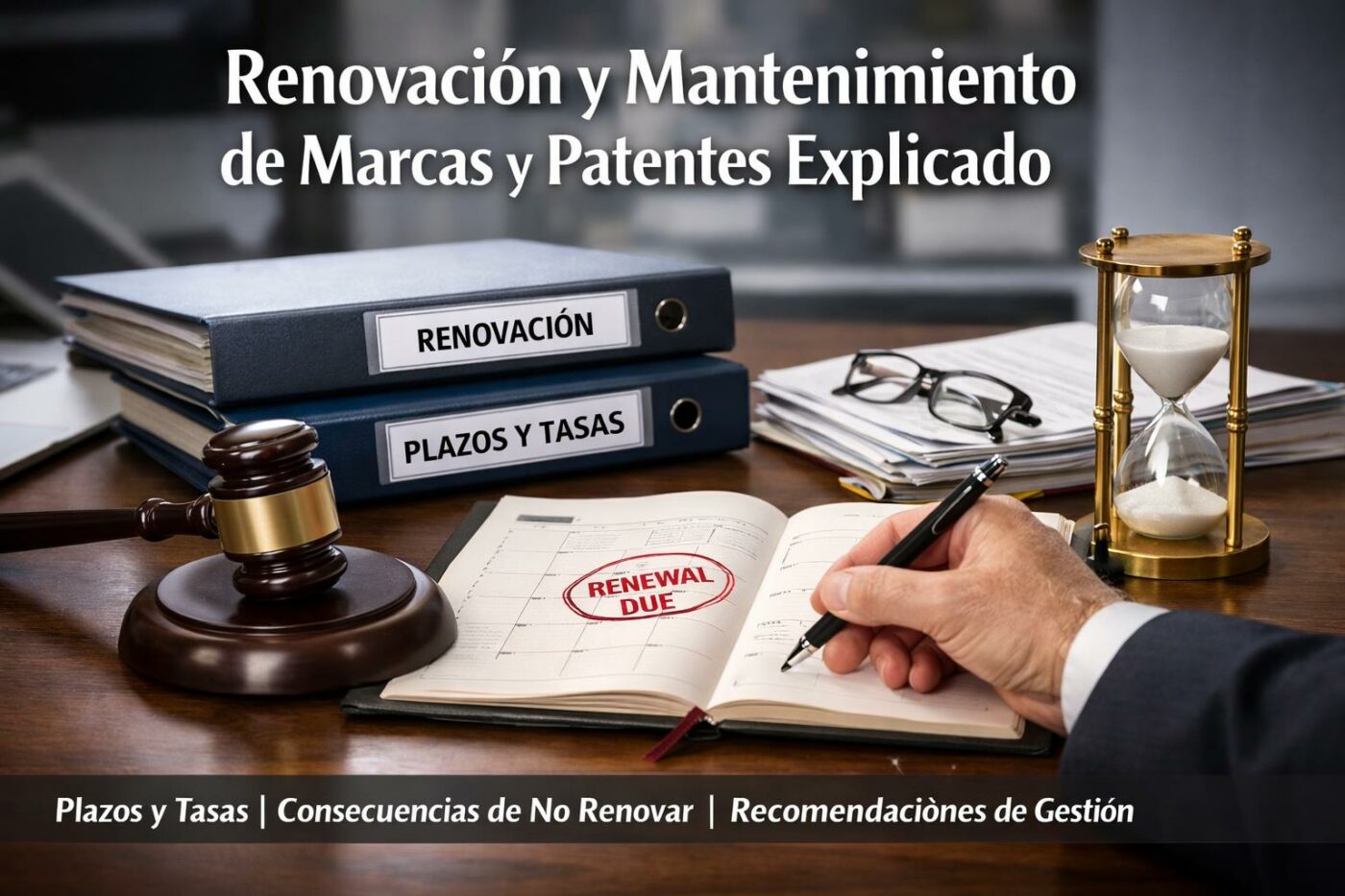
Renewal and maintenance of trademarks and patents It's a strategic responsibility for any company that wants to protect its competitive advantage. In this post, I explain, from a business perspective, the typical timelines and fees, the consequences of not renewing, and practical recommendations for managing the lifecycle of your intellectual property assets.
Renewal and maintenance of trademarks and patents: deadlines and fees
The Renewal and maintenance of trademarks and patents These processes involve periodic procedures and the payment of fees to national or regional offices. Each jurisdiction sets its own deadlines and administrative requirements: some renewals are periodic throughout the life of the right, while others require maintenance payments to keep the patent valid. Fees can vary depending on the type of right, the number of classes (for trademarks), or the processing stage (for patents).
As a company, it's crucial to understand that these deadlines and fees aren't just administrative costs; they're investments in the continuity of your intangible assets. Managing them reactively is usually more expensive: late payment fees, recovery procedures, and, in the worst-case scenario, the irreversible loss of the right.
What does the process include?
- Notifications and deadlines: receiving and tracking official notices.
- Payment of fees: preparation and execution of administrative and maintenance payments.
- Recovery procedures or extensions when permitted by law.
- Updating registration data and managing transfers or licenses.
Consequences of not renewing
- Loss of exclusivity: If it is not renewed, third parties can use the trademark or exploit the invention without infringing rights.
- Registration cancellation: The omission may result in the cancellation of the registration and the inability to claim future protection over the same sign or invention.
- Recovery costs: In some cases it is possible to recover the right, but with surcharges, additional procedures and no guarantee of success.
- Commercial risks: loss of value for the company, impact on agreements, investment and reputation.
Recommendations for managing the lifecycle of your IP assets
To avoid the above consequences, follow these recommended practices:
- Centralize the information: It maintains a unique record with expiration dates, holders, and administrative statuses.
- Implement an alert system: calendars with early reminders and escalated notifications for managers and finance.
- Budget the rates: Integrate renewal obligations into annual financial planning to avoid surprises.
- Conduct regular portfolio reviews: Identify obsolete assets, consolidation opportunities, and potential releases.
- Protects transfers and contracts: It records transfers and licenses so that changes in ownership do not affect the management of renewals.
- Outsource to professionals: It uses specialized services that ensure the management of deadlines, payments, and communications with official offices.
By applying these measures you will avoid common mistakes and ensure that the Renewal and maintenance of trademarks and patents be a controlled process and aligned with the business strategy.
How we can help you: services for businesses
We offer comprehensive intellectual property management services for businesses: portfolio audits, maturity schedules, fee payment management, monitoring of official notifications, and recovery actions when necessary. Our approach combines legal and operational advice to ensure that Renewal and maintenance of trademarks and patents It is carried out without interruptions and with the least risk to your company.
Specific services
- Initial portfolio audit and customized action plan.
- Calendar and alert management for all relevant jurisdictions.
- Payment processing and accounting control of fees.
- Market monitoring and surveillance against unauthorized uses.
- Advice on internal policies and transfer of IP assets.
If you prefer to delegate complete management, we offer a turnkey service that guarantees on-time delivery and optimized administrative costs. Contact us for a no-obligation assessment: we can prepare a quick diagnosis and a proposal tailored to the size and international reach of your company.
Conclusion. The Renewal and maintenance of trademarks and patents These are continuous and strategic processes that require organization, budget, and experience. Managing them correctly protects your company's value and avoids legal and commercial risks. We are available to help you design and implement the management solution that best suits your needs.
You might also be interested in
- How to protect your brand on the internet and social media. Practical measures to defend domains, profiles and digital content against impersonation and unauthorized use.
- Monitoring and defense: protecting your brand against third parties. Tools and procedures to monitor misuse, detect violations, and take timely legal action.
- Step-by-step guide to registering a trademark. We explain the legal process, requirements, and deadlines for protecting your company's brand and avoiding commercial disputes.
- Common mistakes when registering trademarks and how to avoid them. List of common application mistakes and practical strategies for submitting strong applications and avoiding delays.
- How to patent an invention: key steps for entrepreneurs. From prior art searches to filing, learn the steps to patent your invention and maximize its value.
- How to choose an intellectual property agent or lawyer. Criteria and key questions to select the professional who best represents your interests in registrations and litigation.
Frequent questions
What does trademark and patent renewal and maintenance include?
This includes complying with the formal and administrative requirements of the relevant office (payment of fees, periodic filings, declarations of use where applicable), monitoring expiration dates, and taking actions to maintain the validity of the right. It also encompasses the strategic management of the asset within your business portfolio.
What terms and rates should I consider when renewing them?
Timeframes and fees vary depending on the type of right and jurisdiction; there may be initial deadlines, renewable periods, and, in some cases, additional grace periods. It is advisable to consult the applicable regulations or a professional to schedule and estimate the corresponding amounts.
What are the consequences of not renewing a trademark or patent on time?
The main consequence is the potential loss of protection, which could allow third parties to use or register the mark or invention and hinder subsequent legal action. The specific repercussions depend on local legislation and the status of the application.
How can I efficiently manage the lifecycle of my intellectual property assets?
It implements a tracking system (docketing), conducts periodic portfolio audits, prioritizes assets with commercial value, schedules renewals in advance, and combines market monitoring with expert advice to make informed decisions about maintenance, licensing, or abandonment.
Why should I hire a professional service for renovation and maintenance?
A specialized provider offers deadline tracking, submission and fee management, strategic advice to optimize your portfolio, and reduces the risk of administrative errors. If you'd like, we can assess your situation and propose a management plan tailored to your company.