
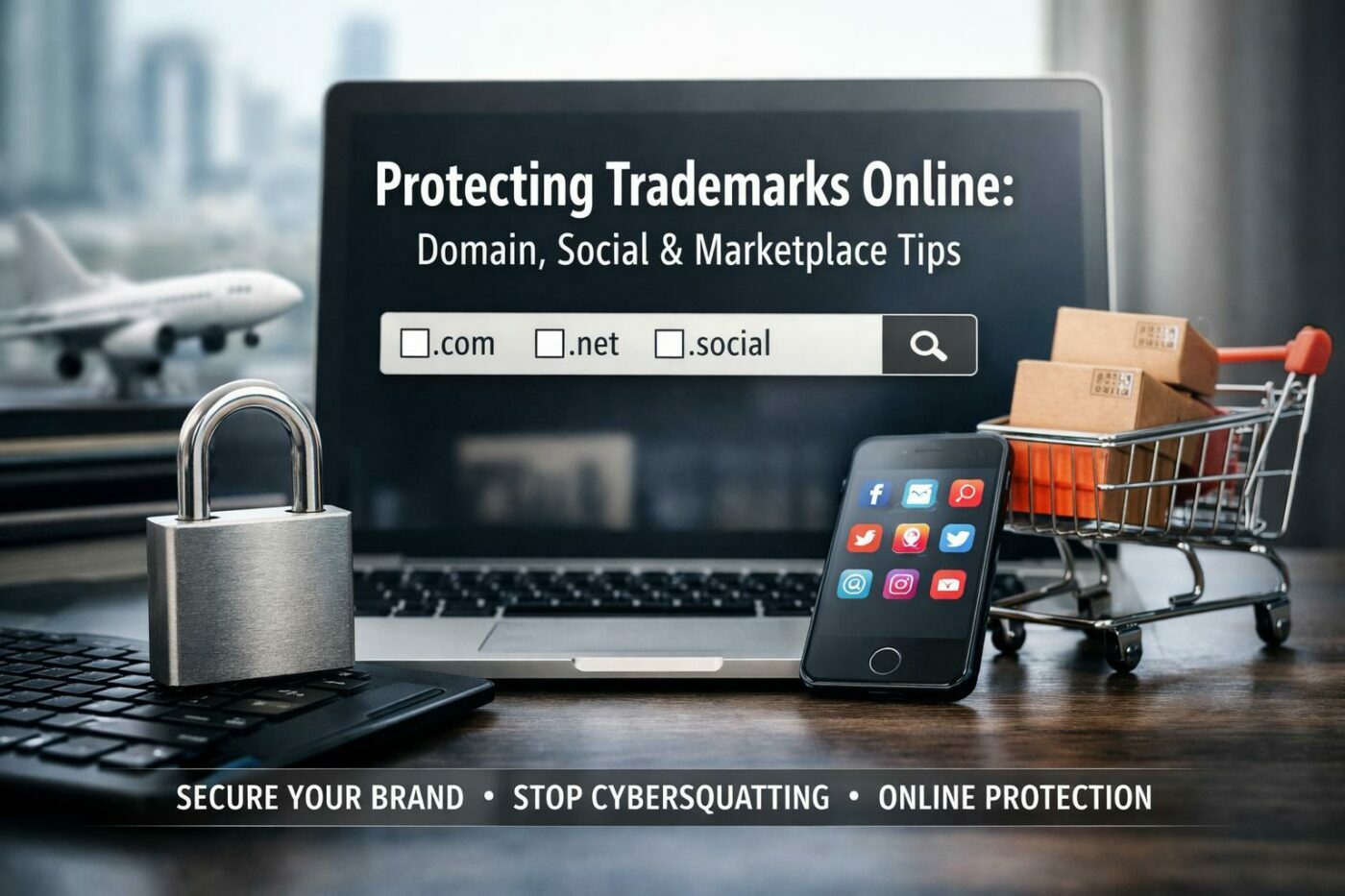
Protecting trademarks online means actively securing domains, social handles and marketplace listings linked to your brand, then monitoring and enforcing rights to prevent cybersquatting or unauthorised use. A clear defensive plan reduces reputational risk, helps preserve goodwill and supports quicker takedowns when infringements occur.
Many business owners delay online protection until they face a problem: a copied product listing, an impersonating social account, or a confusing domain. That reactionary approach increases costs and harms customer trust. Below are practical, jurisdiction-aware steps you can take now to secure digital brand assets and reduce exposure as you scale.
How does protecting trademarks online reduce the risk of cybersquatting?
By registering and actively managing trademark rights, you create legal leverage to challenge bad-faith registrations and remove infringing content. Protecting trademarks online lets you demonstrate ownership when requesting domains, social accounts or marketplace listings be transferred or taken down. It also deters opportunistic actors who search for unregistered brands to exploit.
Which digital assets should I prioritise when protecting a trademark online?
Start with assets that customers use to find and buy your products:
- Primary domain and close variants (common misspellings, relevant ccTLDs).
- Key social media handles on platforms where your customers are active.
- Marketplace storefronts and product listings on Amazon, eBay, Etsy, etc.
- App store names and important category listings if you publish apps.
Practical scenario: a small e-commerce brand
A UK-based SME selling handcrafted homeware secures the .com domain, registers the brand as a trademark in the EU (or UK if selling primarily there), and reserves consistent social handles on Instagram and Facebook. They set up marketplace monitoring for their listed SKUs. When a copycat listing appears, they use their trademark registration to file a marketplace complaint and have the listing removed promptly.
How do domain names and defensive registrations fit into a protection strategy?
Domain registrations are a defensive layer, not a substitute for trademark registration. Defensive domains—common misspellings, relevant country extensions and obvious variations—limit cybersquatters’ options and protect search visibility. If you find a domain registered in bad faith, a registered trademark strengthens your claim under dispute processes such as UDRP (and national procedures).
What steps should I take on social media and marketplaces to protect my brand?
Practical steps include:
- Secure consistent usernames for core platforms and keep profiles verified where possible.
- Document brand use (dates, screenshots) and register trademarks covering the brand in relevant territories.
- Use platform reporting mechanisms promptly; include trademark registration details in notices.
- Monitor marketplace listings and set up alerts for brand or product matches.
Having a registered trademark often speeds up removals on marketplaces and gives you formal evidence to present during disputes.
How can trademark registration strengthen online enforcement?
A registered trademark provides prima facie evidence of ownership in many jurisdictions and simplifies enforcement against infringers. It clarifies the scope of protection (goods and services classes), which helps platforms and registries assess complaints. Registration also supports cross-border enforcement via the Madrid System if you plan international expansion.
What common mistakes put online trademarks at risk?
Business owners frequently make avoidable errors:
- Relying only on domain or social registrations without filing for trademark protection.
- Choosing descriptive or generic marks that are hard to register and enforce.
- Failing to define appropriate classes of goods and services, leaving important uses unprotected.
- Neglecting ongoing monitoring, which allows infringers to build search presence and sales history.
Addressing these issues early reduces the likelihood of costly disputes later.
When should I seek professional help for protecting trademarks online?
Consider professional advice if you plan cross-border sales, cannot decide which classes to register, face a challenging opposition or need a coordinated enforcement programme across domains, social platforms and marketplaces. Professionals can run an availability search, recommend a filing strategy (national, EU or international), and set up monitoring and enforcement workflows aligned with your commercial priorities.
How can MARKANDUS help with protecting trademarks online?
MARKANDUS provides tailored trademark registration and online brand protection services: availability searches, filing strategy across the UK, EU and internationally, monitoring services and enforcement support for domains, social platforms and marketplaces. If you want a targeted plan—for example prioritising the UK and EU marketplaces—we can propose a phased protection strategy linked to your sales channels and budget.
Request a personalised assessment via the MARKANDUS contact page to start with an availability search and a practical action plan for securing your digital assets.
What are the next steps to start protecting trademarks online?
Begin with a clear, low-cost availability search covering your planned name and key classes of goods or services. If risks appear (similar marks, conflicting domains), a specialist can advise on whether to adjust the mark, expand monitoring or proceed to filing. Documentation and a basic monitoring programme can usually be put in place quickly to reduce early-stage exposure.
What frequently asked questions should I consider about protecting my trademark online?
Can I file for a trademark and register domains at the same time? Yes. Many businesses register domains immediately and file trademark applications soon after to align legal protection with brand presence.
How long does online monitoring need to run? Ongoing monitoring is recommended for as long as the brand is in use; risks persist while the brand has value and visibility.
Does a trademark registration stop all unauthorised use? No—registration strengthens your position but practical enforcement still requires evidence gathering and, in some cases, platform or legal action.
Who should I contact first if I discover an infringing listing? Document the infringement, then use the platform’s takedown or complaint process; if the issue persists, seek professional help to escalate with formal notices supported by your registration.
Want a practical review of your online exposure? Contact MARKANDUS for a targeted availability search and an actionable protection plan at MARKANDUS contact page. A short assessment will highlight priority assets and recommend next steps.
You may also be interested in
- Patent Basics for Inventors: When to Patent vs Trademark. Get strategic IP advice for inventions and brands.
- Responding to Trademark Office Actions: A Practical Checklist. Navigate office objections and refusals with expert help.
- Why Trademark Registration Is Essential for Growing Businesses. Contact MARKANDUS to learn how trademark registration protects your brand and business value—get started.
- How to License Your Trademark and Create New Revenue Streams. Monetize your brand with smart licensing agreements.
- Step-by-Step Guide to Registering Your Trademark in 2026. Contact MARKANDUS to simplify trademark registration with expert guidance and fast filing—start here.
- Fast-Track Trademark Registration: Options and Timelines. Learn accelerated filing routes and timelines.
Frequently asked questions
Will registering a trademark automatically recover a domain occupied by someone else?
No. Trademark registration strengthens your position in domain disputes but recovery depends on the domain dispute policy (such as UDRP), evidence of bad faith and the registrar’s procedures.
Does a trademark protect my social media usernames?
A trademark helps when reporting impersonation or trademark infringement to platforms, but social usernames are governed by each platform’s policies and may require separate verification or complaints.
Can I enforce trademarks across multiple marketplaces at once?
Yes. Many marketplaces accept standardised complaints using your registration details. An enforcement programme can prioritise high-risk marketplaces and use registered rights to speed removals.
How often should I run trademark availability searches for new product lines?
Run availability searches before launching any new brand or product name—ideally at the concept stage and again before major market entry—to reduce the risk of conflicts.
Is monitoring expensive for small businesses?
Monitoring can be scaled to budget: basic automated alerts are low-cost, while comprehensive monitoring across domains, social platforms and marketplaces is an investment that pays off by preventing larger disputes.